

With insurance professionals and a 24/7 emergency claims service, we are ready to assist you no matter what.


No events on this day.
We are honored to welcome Rev. Dr. C. I. David Joy (Principal and Professor of New Testament, Kerala United Theological

Our Chapel services are open to all who would like to join us. We meet in-person in the Nathaniel Parker

The OT Guild is a monthly gathering for students, staff, and faculty studying, teaching, and interested in Old Testament studies.

The Hermeneutics Group is a monthly gathering of faculty, students, and others interested in the issues surrounding hermeneutics. Hermeneutics is
No events on this day.

With insurance professionals and a 24/7 emergency claims service, we are ready to assist you no matter what.

No events on this day.
We are honored to welcome Rev. Dr. C. I. David Joy (Principal and Professor of New Testament, Kerala United Theological
Our Chapel services are open to all who would like to join us. We meet in-person in the Nathaniel Parker
The OT Guild is a monthly gathering for students, staff, and faculty studying, teaching, and interested in Old Testament studies.
The Hermeneutics Group is a monthly gathering of faculty, students, and others interested in the issues surrounding hermeneutics. Hermeneutics is
No events on this day.

Wednesday, March 25, 2026
12:30 PM–5:30 PM
McMaster Divinity College
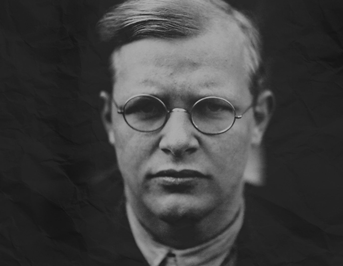
The twentieth-century German Lutheran pastor and theologian Dietrich Bonhoeffer (1906–1945) holds a special place in the hearts of many for his theological insight and his courageous commitment to living out a Christ-centered, community-oriented vision of the Gospel’s costly grace in the midst of historical crisis. Bonhoeffer’s voice continues to inspire people to think both with and after him in ways that are both creatively constructive and critically relevant.
We warmly invite longtime fans and those new to his work to join us for a thought-provoking afternoon of scholarly exploration. Together, we will reflect on Bonhoeffer’s life, work, and enduring legacy, with particular attention to fresh perspectives on his theology and ethics and their ongoing significance for today.
Plenary Speaker
Patrick S. Franklin (PhD) is the Alister E. McGrath Chair of Christian Thought & Spirituality and Associate Professor of Theology at Tyndale University in Toronto. He is the author of Being Human, Being Church: The Significance of Theological Anthropology for Ecclesiology (Paternoster, 2016) and many articles and book chapters, include several engaging various aspects of Bonhoeffer’s theology.


Plenary Speaker
Elizabeth Gerhardt (MSW, STM, ThD Boston University) is Professor of Theology and Social Ethics at Northeastern Seminary and Roberts Wesleyan University. Research interests focus on the application of the theology of the cross to contemporary justice concerns, and the role of the church in responding to interpersonal, cultural and political violence. Dr. Gerhardt is the author of The Cross and Gendercide: A Theological Response to Global Violence against Women and Children (InterVarsity Press).
Plenary Speaker
Stanley E. Porter has taught for over thirty years in universities and seminaries in Canada, the USA, and the UK. He has served as President and Professor of New Testament at MDC since 2001. His publications include 38 authored books and over 400 authored journal articles and chapters along with over 100 other shorter pieces; he has also edited over 100 volumes. He remains a well-known and respected expert in Greek and New Testament studies throughout the world, but has interests that cover the range of New Testament studies, from Paul to the gospels to papyrology and textual criticism, as well as the Septuagint.
This event will be held in person at McMaster Divinity College in Hamilton, Ontario. There is no cost to attend, but registration is required. Coffee and light refreshments will be provided.
| Time | Track 1: Biblical Studies Cullen Hall |
Track 2: Contemporary Political Engagement Hurlburt Hall |
Track 3: Contextual and Sociological Theology Cochran Room |
Track 4: Systematic Theology Room 141 |
Track 5: Ecclesiology and Ethics Chapel |
| 12:30 – 12:35 | Welcome and Announcements Cullen Hall |
||||
| 12:35 – 1:20 | Keynote #1: Elizabeth Gerhardt “Dietrich Bonhoeffer in London (1933-1935): At the Crossroads of Church and State” Cullen Hall |
||||
| 1:30 – 2:00 | J. Gregory Davidson: “Bonhoeffer’s Reading of Genesis 3:6 in Creation and Fall: Discourse, Ontology and Context” |
Mark McKim: “Bonhoeffer in the Age of Trump” |
Kwasi Boakye: “Blyden, Bonhoeffer, and the Black Experience: A Comparative Analysis of the Theodicies of ‘Negro’ Slave Religion and Dietrich Bonhoeffer” |
Bert Douglas: “Only a Suffering God Can Help: Divine Vulnerability and the Cost of Life Together in Dietrich Bonhoeffer” |
Quinten Shannon: “A Theology of Togetherness: Bonhoeffer’s Response to the Post-Pandemic Church” |
| 2:10 – 2:40 | Isaiah C. Padgett: “Bonhoeffer the Sage? Examining Creation and Fall’s Theological Anthropology in Dialogue with the Hebrew Wisdom Literature” |
Tim Stagner: “The Spiritual Theology of Dietrich Bonhoeffer as a Corrective to Current Trends in the United States” |
Lee Beach: “A Man in Harlem: How the Black Church Made Dietrich Bonhoeffer into a Practical Theologian” |
Corey Parish: “Vulnerability as a Human Paradigm: Christian Humanism and Disability in Bonhoeffer’s Theological Anthropology” |
Gordon L. Heath: “Lying, Deception, and Tyrannicide: Imitating Bonhoeffer When Under Duress?” |
| 2:40 – 2:55 | Intermission and Refreshments Cullen Hall |
||||
| 2:55 – 3:40 | Keynote #2: Patrick S. Franklin “Bonhoeffer’s Incarnational Ethics as a Call to Resist the Seductive Power of Ideology and Polarization” Cullen Hall |
||||
| 3:50 – 4:20 | Aaron Jung: “Dietrich Bonhoeffer, Son Yang-won, and a European-Korean Decolonial Reading of the New Testament” |
Tom Lee: “Dietrich Bonhoeffer’s Confessional Preaching and Its Implications for Contemporary Political Polarization” |
James Dvorak: “‘Friendly Conversation or Fisticuffs?’: Dietrich Bonhoeffer and Pierre Bourdieu in Conversation – A Thought Experiment” |
Clement Yung Wen: “Bonhoeffer’s Social Ontology as Answer to a Contemporary Theological Impasse” |
Laura Gobbels: “The Church in the Face of the State: The Connection between Bonhoeffer’s Ecclesiology and his Political Theology” |
| 4:30 – 5:15 | Keynote #3: Stanley E. Porter “Dietrich Bonhoeffer as an Interpreter of the New Testament” Cullen Hall |
||||
| 5:15 – 5:30 | Closing Remarks Cullen Hall |
||||
“Dietrich Bonhoeffer in London (1933-1935): At the Crossroads of Church and State”
Elizabeth Gerhardt, Northeastern Seminary and Roberts Wesleyan University
Bonhoeffer arrived in London in October 1933. His letters (1933-1935) reflect at times a confident Bonhoeffer as he stood at the threshold of a dark and perilous world, and an apprehensive and concerned pastor, and theologian caught up in a drama just enfolding. The church was at an impasse. The central question was, “Should the church of Germany interfere with the growing State interference with church matters?” The question of church and state boundaries was rooted in his theological questions concerning Christian identity, freedom and responsibility. Bonhoeffer’s move to a more active resistance stance did not begin in London. However, his time in London afforded him space outside of the German context to explore deeper ecumenical relationships that were relevant to the work of the later Confessing Church. The time also allowed for spiritual and theological reflection on a possible way forward for both himself, and the church. This time in what he called “the wilderness,” laid the foundation for critical decisions that affected the next ten years of church engagement and resistance.
“Bonhoeffer’s Incarnational Ethics as a Call to Resist the Seductive Power of Ideology and Polarization”
Patrick S. Franklin, Tyndale University
Our contemporary world is deeply divided and increasingly polarized. The 2023 Edelman Trust Barometer global report found that two-thirds of respondents (globally) observe “an unprecedented lack of civility and mutual respect in society.” Richard Edelman comments, “The consequence of … low trust in government, systemic unfairness, and lack of common values, is a descent from an acceptable level of societal debate to a critical level of polarization. In nearly one quarter of countries surveyed (Argentina, Colombia, United States, South Africa, Sweden, Spain) we observe both deep division and entrenched views.”
In such a context of entrenched, tribalistic division and polarization, spurred on by the echo chambers and algorithms of the Internet and social media, it becomes easy to see one’s own tribe as “the good guys” and one’s opponents as morally and politically degenerate, as unequivocally evil. We are 100% in the right; they are 100% in the wrong. Those on the Left are not just liberal but socialists committed to destroying western society and its values; those on the Right are not just conservative but fascists seeking authoritarian control and the rule of the strong over the weak and vulnerable.
What if all of this is symptomatic of a deeper, more fundamental problem that implicates all of us? What if, as Bonhoeffer suggests, our problem is not merely a failure to live up to the requirements of a moral system but our grasping after “the knowledge of good and evil” as such? What if, by our own resistance to receiving and participating in Goodness (and only God is Good, as Jesus says), we have unwittingly sought to enthrone ourselves as the arbiters and enforcers of morality; or worse, as the very content and embodiment of righteousness? Have we all become pedlars of ideology?
This paper draws together several themes of Bonhoeffer’s Ethics to help us diagnose and address the contemporary problem of polarization at a deeper and more textured theological level of analysis. At the centre of my reflection is Bonhoeffer’s discussion of the problem of dualism (or disintegration) over-against our objective reconciliation and integration in Christ, as well as the need for Christians to be reawakened, reoriented, and renewed by the ‘ultimate’ which is dawning and taking form right in the midst of the penultimate uncertainties, anxieties, and animosities of our present existence.
“Dietrich Bonhoeffer as an Interpreter of the New Testament”
Stanley E. Porter, McMaster Divinity College
Bonhoeffer is known as a theologian and ethicists, as well as being an exemplary martyr whose work on behalf of Christians in Nazi Germany ultimately led him on a collision course with Hitler and the Third Reich. He comes legitimately by his credentials as a theologian and ethicist by way of several of his publications already during his lifetime that have endured after his death. But what kind of New Testament exegete was Bonhoeffer? Bonhoeffer was in fact not known as a New Testament scholar, even though his classical Gymnasium education in pre-war Germany equipped him well for such a task. Scripture is cited by Bonhoeffer throughout his works, such as sermons and other incidental writings, but in particular in his Life Together, Christ the Center, and his The Cost of Discipleship. In fact, The Cost of Discipleship is formed around interpretation of the Sermon on the Mount (Matt 5-7) and Matthew 9-10. In this paper, I will examine Bonhoeffer as a New Testament interpreter and exegete, focusing upon his treatment of these crucial passages in Matthew’s Gospel, with an eye toward their relationship to his larger theological orientation.
“Bonhoeffer’s Reading of Genesis 3:6 in Creation and Fall: Discourse, Ontology and Context”
J. Gregory Davidson, McMaster Divinity College
This paper examines Dietrich Bonhoeffer’s interpretation of Genesis 3:6, the classic locus of the fall in the Old Testament, as developed in Creation and Fall. Bonhoeffer’s treatment is striking not only for its theological claims but also for its mode of discourse, which focuses less on commentary and footnotes in favour of direct engagement with the biblical text as living address, marked by vivid and dramatic language. The paper explores the content of Bonhoeffer’s reading, focusing on his insistence that the fall is not primarily a moral failure but an ontological rupture: the destruction of creatureliness as humanity becomes sicut deus. Finally, the paper situates Bonhoeffer’s interpretation within the context of early twentieth-century Old Testament approaches, particularly in relation to contemporaneous historical-critical and form-critical methods. In doing so, it seeks to highlight both the theological depth and ongoing relevance of Bonhoeffer’s reading of Genesis 3:6.
“Bonhoeffer the Sage? Examining Creation and Fall’s Theological Anthropology in Dialogue with the Hebrew Wisdom Literature”
Isaiah C. Padgett, McMaster Divinity College
Of all the writings of Dietrich Bonhoeffer, Creation and Fall remains the least examined by Bonhoeffer scholars. This is especially surprising given the importance of this work, not just as a representation of Bonhoeffer’s theological interpretation of Scripture, but as the connecting point between his early and later thought. As such, this paper aims to re-examine this oft-neglected work—in particular its theological anthropology—from a biblical-theological perspective. Bonhoeffer’s sustained reflections upon the relationship between humanity and God, men and women, and the centrality of limitation in human existence especially mirror the reflections found within the Hebrew wisdom tradition. Ultimately, this paper explores Bonhoeffer’s theological anthropology not just as an outworking of his theological interpretation of Genesis 1–3, but whether his thought also finds particular resonance with the sapiential tradition of the Hebrew wisdom literature.
“Dietrich Bonhoeffer, Son Yang-won, and a European Korean Decolonial Reading of the New Testament”
Aaron Jung, McMaster Divinity College
This essay places Dietrich Bonhoeffer and Son Yang-won in conversation to sketch a Kingdom-of-God-oriented decolonial criticism. Reading Bonhoeffer’s Discipleship together with selected passages from Letters and Papers from Prison and setting them alongside Son’s “Ten Thanksgivings” and key prison texts, the study asks how German and Korean Christian witnesses resisted oppressive colonial regimes. To this end, recent decolonial theory is engaged meta-critically: Western postcolonial and decolonial frameworks are treated as indispensable yet also subject to decentering and reinterpretation in light of the cruciform politics of the Kingdom of God. In dialogue with Acts 4, Romans 8, and Romans 12, Bonhoeffer’s costly discipleship and vision of a church “for others” are read alongside Son’s refusal of State Shinto, his life among leprosy patients, and his enemy-embracing response to his sons’ murder. Out of this triangulation emerges a “double delinking”: from colonial violence on the one hand, and from retaliatory violence and nationalist sacralization on the other. Finally, the essay proposes that remembered oppression, concrete material liberation, and a Spirit-empowered politics of love belong together within a single eschatological horizon shaped by a decolonial vision of the Kingdom of God.
“Bonhoeffer in the Age of Trump”
Mark McKim
“Bonhoeffer in the Age of Trump,” will begin by delineating the characteristics of fascism, and then will make comparisons between European fascism of the 1930’s and 40’s, and the far right/fascist political movements in contemporary Europe and the United States. The paper will then explore some aspects of Bonhoeffer’s writing which continue to be relevant in addressing these recent movements from the perspective of Christian thought, while also pointing out areas in which Bonhoeffer is not especially relevant or helpful, particularly for those in the Believers’ church tradition.
“The Spiritual Theology of Dietrich Bonhoeffer as a Corrective to Current Trends in the United States”
Tim Stagner, McMaster Divinity College & Ozarks Technical Community College
This paper is a study of tensions within the spiritual landscape in the United States. First,
I trace the decline in Christian influence alongside the rise of those who are religiously
unaffiliated, even as they maintain interest in spirituality, broadly defined, and the reactionary
rise of Christian nationalistic impulses in recent years. Then, I consider the theological
rootedness of Dietrich Bonhoeffer’s spirituality in Nazi Germany and how it informed his stance
against the politicizing of German Christianity and his support for those who were vulnerable
and suffering. Finally, I explore opportunities for Christian engagement within the current
milieu, how Bonhoeffer can serve as an exemplar, and hopeful signs for a rooted and vibrant
Christian spirituality’s interaction with the surrounding culture.
“Dietrich Bonhoeffer’s Confessional Preaching and Its Implications for Contemporary Political Polarization”
Tom Lee, McMaster Divinity College
This paper examines Dietrich Bonhoeffer’s practice of preaching during the political crisis of National Socialism and explores its implications for preaching amid contemporary political polarization. Rather than treating preaching as political commentary or policy critique, Bonhoeffer understood preaching as a confessional act in which the church publicly bears witness to Jesus Christ as Lord. In a context where the Nazi regime claimed total allegiance through a rival “gospel,” Bonhoeffer’s sermons reoriented the church’s ultimate loyalty and exposed the idolatry of political power without adopting partisan rhetoric. Drawing on selected sermons from Bonhoeffer and his theological reflections on preaching, this study analyzes the rhetorical and theological features of confessional preaching. It argues that Bonhoeffer offers a constructive model for contemporary preaching that resists both partisan politicization and evasive silence, enabling the church to speak responsibly and publicly in times of deep political division.
“Blyden, Bonhoeffer, and the Black Experience: A Comparative Analysis of the Theodicies of ‘Negro’ Slave Religion and Dietrich Bonhoeffer”
Kwasi Boakye, McMaster Divinity College
This study compares theodicies from two different periods, a century apart: postbellum US and the Nazi era. The method involves analyzing Edward Blyden’s theodicy within the broader nineteenth-century Afro-Christian (“negro”) religious worldview. The research then assesses Dietrich Bonhoeffer’s theodicy within the larger framework of the Nazi era. Besides comparing their approaches to theodicy, the study also examines the factors that influenced them and their lasting impacts. The paper finds that while Blyden articulated a form of Irenaean theodicy consistent with the American Colonization Society’s ideas, Bonhoeffer addressed the problem of evil through an existential-pastoral theodicy similar to that of ordinary members of the enslaved “negro” community. However, both Blyden and Bonhoeffer expressed an Augustinian theodicy with its related eschatological vision.
“A Man in Harlem: How the Black Church Made Dietrich Bonhoeffer into a Practical Theologian”
Lee Beach, McMaster Divinity College
When Bonhoeffer arrived in New York City for post-doctoral studies at Union Theological Seminary he was a rising voice on the German academic landscape. While in New York he became immersed in the Black church in Harlem. As a result of his experience with Black spirituality and activism he was transformed into a theologian and pastor who placed ultimate emphasis on the practical outworking of Christian theology. This paper will explore the influence of the Black church in America on Bonhoeffer’s life and academic work offering the argument that it changed him personally as well as professionally in a way that made him who he ultimately became.
“‘Friendly Conversation or Fisticuffs?’: Dietrich Bonhoeffer and Pierre Bourdieu in Conversation – A Thought Experiment”
James Dvorak, McMaster Divinity College
It has been suggested (see Benac, “Bonhofferian Approach to Social Analysis,” in Bonhoeffer Legacy 5 [2018] 63–81) that Bonhoeffer’s social analysis is complementary to modern theologians’ use of Pierre Bourdieu’s Theory of Practice in theology and ethics. Given the two very different theoretical and methodological backgrounds of Bonhoeffer and Bourdieu, I question whether the two approaches exhibit as much consonance as has been claimed, except, perhaps, at a very high level of abstraction. Thus, I would like to bring Bonhoeffer and Bourdieu into dialogue with one another to see what, if any, complementarity might exist between them.
“Only a Suffering God Can Help: Divine Vulnerability and the Cost of Life Together in Dietrich Bonhoeffer”
Bert Douglas, McMaster Divinity College
Dietrich Bonhoeffer’s claim that “only a suffering God can help” has often been read sentimentally or reduced to a general affirmation of divine solidarity. This paper argues instead that Bonhoeffer’s theology of divine vulnerability is inseparable from his Christological account of responsibility and life together. Drawing on Christ the Center, Ethics, and Letters and Papers from Prison, the paper shows that for Bonhoeffer, God’s suffering is not a retreat from power but the concrete form divine power takes within a fractured reality. Engaging contemporary trauma theology, the paper clarifies how vulnerability resists both moralism and quietism, demanding costly presence rather than pastoral disengagement. The church, shaped by the suffering God, is thus called not to triumphalist certainty or therapeutic detachment, but to a form of life together marked by responsibility, risk, and faithful endurance.
“Vulnerability as a Human Paradigm: Christian Humanism and Disability in Bonhoeffer’s Theological Anthropology”
Corey Parish, McMaster Divinity College
This paper presents a theological-anthropological exploration of Dietrich Bonhoeffer’s academic and personal writings, contending that his understanding of the human person underwent a significant transformation through his encounters with vulnerability and interdependence in Harlem, the Bethel disability community, and Tegel Prison. These experiences shifted his understanding of “being human” away from modern ideals of autonomy and self-mastery toward a relational, cruciform personhood grounded in the person of Christ. Central to this reconfiguration is a Christocentric anthropology in which Christ appears as the “human being par excellence” who becomes an “outcast among outcasts,” fully embodying and renewing humanity within his own being. By interpreting vulnerability and interdependence as fundamental characteristics of human existence rather than accidental deficits, Bonhoeffer develops a theological vision that resonates strongly with contemporary disability theology. Namely, his account challenges anthropological assumptions that equate personhood with rational capacity, productivity, or independence, and instead locates human dignity in participation, relation, and vicarious representation (Stellvertretung). Read through the lens of contemporary disability theology—and a broad range of theological and anthropological insights within the Christian tradition—Bonhoeffer’s “Christian humanism” offers a constructive framework for reimagining human life as vulnerable and interdependent, where those marked as “disabled” or “marginal’ become paradigmatic of what it means to be “fully human.” The paper concludes by arguing that Bonhoeffer’s vision of humanity—realized communally and cruciformly within the Sanctorum Communio—opens a theological anthropology that is not only Christological and ecclesial but also critically responsive to the embodied realities of disability and vulnerability.
“Bonhoeffer’s Social Ontology as Answer to a Contemporary Theological Impasse”
Clement Yung Wen, McMaster Divinity College
This paper seeks to situate Dietrich Bonhoeffer’s (1906–1945) early proposals surrounding the ontology of the social as being a constructively viable answer to an ongoing theological impasse within contemporary theology surrounding the relationship between “Christian personalism” and how such is to be related to “social bodies.” The thought of the late Wolfhart Pannenberg (1928–2014) and William Cavanaugh (1962–), respectively, will be engaged as representatives of the latter two modalities. It will be shown that the type of critical theological construction with regard to personhood, sociality, and ecclesial political engagement that is currently sorely needed runs through the impasse that is represented by the differences between Pannenberg and Cavanaugh, with Bonhoeffer providing a “third way” forward that is more honouring of the best of both sides.
“A Theology of Togetherness: Bonhoeffer’s Response to the Post-Pandemic Church”
Quinten Shannon, McMaster Divinity College
Among the most significant challenges to the Church in the modern era was the COVID-19 pandemic, which compelled the pastors and congregations to adapt rapidly while raising enduring theological and pastoral questions concerning ecclesial identity, community, and embodiment. One of the most resounding consequences of this period, particularly within North America, was the rise and rapid expansion of online churches. Even five years after the pandemic, many congregations continue to prioritize digital platforms as central spaces for worship and communal life. This paper seeks to evaluate the lasting impacts of online church and to analyze its implications for the body of Christ through ecclesial, psychological, and sociological lenses, with particular attention to the modern conception and value placed on the physical gathering of the Church. Drawing on the writings of Dietrich Bonhoeffer, especially Life Together and Discipleship, and relevant psychological and sociological studies, this paper will argue that while online church functioned as a necessary and beneficial adaptation during the pandemic, the Church is ultimately called to reestablish a physically embodied presence within local communities.
“Lying, Deception, and Tyrannicide: Imitating Bonhoeffer When Under Duress?”
Gordon L. Heath, McMaster Divinity College
Christians in various parts of the world increasingly find themselves under duress due to pressures to conform to actions and attitudes that they find deeply troubling. This paper explores Bonhoeffer’s lying, deception, and support for tyrannicide and considers how one could—if at all—imitate him as a way forward for those seeking a path of faithfulness, witness, love, subterfuge, and survival.
“The Church in the Face of the State: The Connection between Bonhoeffer’s Ecclesiology and his Political Theology”
Laura Gobbels, McMaster Divinity College
Bonhoeffer, in many of his writings, investigates and seeks to understand what type of relationship the church and the state should have with one another. In recent years, there has been an increasing need to examine this relationship, as well as understand what this relationship should be. Many of Bonhoeffer’s writings such as his 1933 paper on ‘The Church and the Jewish Question,’ detail his ecclesiology, as well as how the church should interact with the state in which it resides. This paper titled, “The Church in the Face of the State,” will detail Bonhoeffer’s view on the church and the state, as well as illustrate how Bonhoeffer’s ecclesiology directly influenced his viewpoint. I will also argue that Bonhoeffer’s view on the church and the state can be helpful for the church and the Christian individual as they seek to better understand the relationship between the church and the state.
| Time | Track 1: Biblical Studies Cullen Hall |
Track 2: Contemporary Political Engagement Hurlburt Hall |
Track 3: Contextual and Sociological Theology Cochran Room |
Track 4: Systematic Theology Room 141 |
Track 5: Ecclesiology and Ethics Chapel |
| 12:30 – 12:35 | Welcome and Announcements Cullen Hall |
||||
| 12:35 – 1:20 | Keynote #1: Elizabeth Gerhardt “Dietrich Bonhoeffer in London (1933-1935): At the Crossroads of Church and State” Cullen Hall |
||||
| 1:30 – 2:00 | J. Gregory Davidson: “Bonhoeffer’s Reading of Genesis 3:6 in Creation and Fall: Discourse, Ontology and Context” |
Mark McKim: “Bonhoeffer in the Age of Trump” |
Kwasi Boakye: “Blyden, Bonhoeffer, and the Black Experience: A Comparative Analysis of the Theodicies of ‘Negro’ Slave Religion and Dietrich Bonhoeffer” |
Bert Douglas: “Only a Suffering God Can Help: Divine Vulnerability and the Cost of Life Together in Dietrich Bonhoeffer” |
Quinten Shannon: “A Theology of Togetherness: Bonhoeffer’s Response to the Post-Pandemic Church” |
| 2:10 – 2:40 | Isaiah C. Padgett: “Bonhoeffer the Sage? Examining Creation and Fall’s Theological Anthropology in Dialogue with the Hebrew Wisdom Literature” |
Tim Stagner: “The Spiritual Theology of Dietrich Bonhoeffer as a Corrective to Current Trends in the United States” |
Lee Beach: “A Man in Harlem: How the Black Church Made Dietrich Bonhoeffer into a Practical Theologian” |
Corey Parish: “Vulnerability as a Human Paradigm: Christian Humanism and Disability in Bonhoeffer’s Theological Anthropology” |
Gordon L. Heath: “Lying, Deception, and Tyrannicide: Imitating Bonhoeffer When Under Duress?” |
| 2:40 – 2:55 | Intermission and Refreshments Cullen Hall |
||||
| 2:55 – 3:40 | Keynote #2: Patrick S. Franklin “Bonhoeffer’s Incarnational Ethics as a Call to Resist the Seductive Power of Ideology and Polarization” Cullen Hall |
||||
| 3:50 – 4:20 | Aaron Jung: “Dietrich Bonhoeffer, Son Yang-won, and a European-Korean Decolonial Reading of the New Testament” |
Tom Lee: “Dietrich Bonhoeffer’s Confessional Preaching and Its Implications for Contemporary Political Polarization” |
James Dvorak: “‘Friendly Conversation or Fisticuffs?’: Dietrich Bonhoeffer and Pierre Bourdieu in Conversation – A Thought Experiment” |
Clement Yung Wen: “Bonhoeffer’s Social Ontology as Answer to a Contemporary Theological Impasse” |
Laura Gobbels: “The Church in the Face of the State: The Connection between Bonhoeffer’s Ecclesiology and his Political Theology” |
| 4:30 – 5:15 | Keynote #3: Stanley E. Porter “Dietrich Bonhoeffer as an Interpreter of the New Testament” Cullen Hall |
||||
| 5:15 – 5:30 | Closing Remarks Cullen Hall |
||||
“Dietrich Bonhoeffer in London (1933-1935): At the Crossroads of Church and State”
Elizabeth Gerhardt, Northeastern Seminary and Roberts Wesleyan University
Bonhoeffer arrived in London in October 1933. His letters (1933-1935) reflect at times a confident Bonhoeffer as he stood at the threshold of a dark and perilous world, and an apprehensive and concerned pastor, and theologian caught up in a drama just enfolding. The church was at an impasse. The central question was, “Should the church of Germany interfere with the growing State interference with church matters?” The question of church and state boundaries was rooted in his theological questions concerning Christian identity, freedom and responsibility. Bonhoeffer’s move to a more active resistance stance did not begin in London. However, his time in London afforded him space outside of the German context to explore deeper ecumenical relationships that were relevant to the work of the later Confessing Church. The time also allowed for spiritual and theological reflection on a possible way forward for both himself, and the church. This time in what he called “the wilderness,” laid the foundation for critical decisions that affected the next ten years of church engagement and resistance.
“Bonhoeffer’s Incarnational Ethics as a Call to Resist the Seductive Power of Ideology and Polarization”
Patrick S. Franklin, Tyndale University
Our contemporary world is deeply divided and increasingly polarized. The 2023 Edelman Trust Barometer global report found that two-thirds of respondents (globally) observe “an unprecedented lack of civility and mutual respect in society.” Richard Edelman comments, “The consequence of … low trust in government, systemic unfairness, and lack of common values, is a descent from an acceptable level of societal debate to a critical level of polarization. In nearly one quarter of countries surveyed (Argentina, Colombia, United States, South Africa, Sweden, Spain) we observe both deep division and entrenched views.”
In such a context of entrenched, tribalistic division and polarization, spurred on by the echo chambers and algorithms of the Internet and social media, it becomes easy to see one’s own tribe as “the good guys” and one’s opponents as morally and politically degenerate, as unequivocally evil. We are 100% in the right; they are 100% in the wrong. Those on the Left are not just liberal but socialists committed to destroying western society and its values; those on the Right are not just conservative but fascists seeking authoritarian control and the rule of the strong over the weak and vulnerable.
What if all of this is symptomatic of a deeper, more fundamental problem that implicates all of us? What if, as Bonhoeffer suggests, our problem is not merely a failure to live up to the requirements of a moral system but our grasping after “the knowledge of good and evil” as such? What if, by our own resistance to receiving and participating in Goodness (and only God is Good, as Jesus says), we have unwittingly sought to enthrone ourselves as the arbiters and enforcers of morality; or worse, as the very content and embodiment of righteousness? Have we all become pedlars of ideology?
This paper draws together several themes of Bonhoeffer’s Ethics to help us diagnose and address the contemporary problem of polarization at a deeper and more textured theological level of analysis. At the centre of my reflection is Bonhoeffer’s discussion of the problem of dualism (or disintegration) over-against our objective reconciliation and integration in Christ, as well as the need for Christians to be reawakened, reoriented, and renewed by the ‘ultimate’ which is dawning and taking form right in the midst of the penultimate uncertainties, anxieties, and animosities of our present existence.
“Dietrich Bonhoeffer as an Interpreter of the New Testament”
Stanley E. Porter, McMaster Divinity College
Bonhoeffer is known as a theologian and ethicists, as well as being an exemplary martyr whose work on behalf of Christians in Nazi Germany ultimately led him on a collision course with Hitler and the Third Reich. He comes legitimately by his credentials as a theologian and ethicist by way of several of his publications already during his lifetime that have endured after his death. But what kind of New Testament exegete was Bonhoeffer? Bonhoeffer was in fact not known as a New Testament scholar, even though his classical Gymnasium education in pre-war Germany equipped him well for such a task. Scripture is cited by Bonhoeffer throughout his works, such as sermons and other incidental writings, but in particular in his Life Together, Christ the Center, and his The Cost of Discipleship. In fact, The Cost of Discipleship is formed around interpretation of the Sermon on the Mount (Matt 5-7) and Matthew 9-10. In this paper, I will examine Bonhoeffer as a New Testament interpreter and exegete, focusing upon his treatment of these crucial passages in Matthew’s Gospel, with an eye toward their relationship to his larger theological orientation.
“Bonhoeffer’s Reading of Genesis 3:6 in Creation and Fall: Discourse, Ontology and Context”
J. Gregory Davidson, McMaster Divinity College
This paper examines Dietrich Bonhoeffer’s interpretation of Genesis 3:6, the classic locus of the fall in the Old Testament, as developed in Creation and Fall. Bonhoeffer’s treatment is striking not only for its theological claims but also for its mode of discourse, which focuses less on commentary and footnotes in favour of direct engagement with the biblical text as living address, marked by vivid and dramatic language. The paper explores the content of Bonhoeffer’s reading, focusing on his insistence that the fall is not primarily a moral failure but an ontological rupture: the destruction of creatureliness as humanity becomes sicut deus. Finally, the paper situates Bonhoeffer’s interpretation within the context of early twentieth-century Old Testament approaches, particularly in relation to contemporaneous historical-critical and form-critical methods. In doing so, it seeks to highlight both the theological depth and ongoing relevance of Bonhoeffer’s reading of Genesis 3:6.
“Bonhoeffer the Sage? Examining Creation and Fall’s Theological Anthropology in Dialogue with the Hebrew Wisdom Literature”
Isaiah C. Padgett, McMaster Divinity College
Of all the writings of Dietrich Bonhoeffer, Creation and Fall remains the least examined by Bonhoeffer scholars. This is especially surprising given the importance of this work, not just as a representation of Bonhoeffer’s theological interpretation of Scripture, but as the connecting point between his early and later thought. As such, this paper aims to re-examine this oft-neglected work—in particular its theological anthropology—from a biblical-theological perspective. Bonhoeffer’s sustained reflections upon the relationship between humanity and God, men and women, and the centrality of limitation in human existence especially mirror the reflections found within the Hebrew wisdom tradition. Ultimately, this paper explores Bonhoeffer’s theological anthropology not just as an outworking of his theological interpretation of Genesis 1–3, but whether his thought also finds particular resonance with the sapiential tradition of the Hebrew wisdom literature.
“Dietrich Bonhoeffer, Son Yang-won, and a European Korean Decolonial Reading of the New Testament”
Aaron Jung, McMaster Divinity College
This essay places Dietrich Bonhoeffer and Son Yang-won in conversation to sketch a Kingdom-of-God-oriented decolonial criticism. Reading Bonhoeffer’s Discipleship together with selected passages from Letters and Papers from Prison and setting them alongside Son’s “Ten Thanksgivings” and key prison texts, the study asks how German and Korean Christian witnesses resisted oppressive colonial regimes. To this end, recent decolonial theory is engaged meta-critically: Western postcolonial and decolonial frameworks are treated as indispensable yet also subject to decentering and reinterpretation in light of the cruciform politics of the Kingdom of God. In dialogue with Acts 4, Romans 8, and Romans 12, Bonhoeffer’s costly discipleship and vision of a church “for others” are read alongside Son’s refusal of State Shinto, his life among leprosy patients, and his enemy-embracing response to his sons’ murder. Out of this triangulation emerges a “double delinking”: from colonial violence on the one hand, and from retaliatory violence and nationalist sacralization on the other. Finally, the essay proposes that remembered oppression, concrete material liberation, and a Spirit-empowered politics of love belong together within a single eschatological horizon shaped by a decolonial vision of the Kingdom of God.
“Bonhoeffer in the Age of Trump”
Mark McKim
“Bonhoeffer in the Age of Trump,” will begin by delineating the characteristics of fascism, and then will make comparisons between European fascism of the 1930’s and 40’s, and the far right/fascist political movements in contemporary Europe and the United States. The paper will then explore some aspects of Bonhoeffer’s writing which continue to be relevant in addressing these recent movements from the perspective of Christian thought, while also pointing out areas in which Bonhoeffer is not especially relevant or helpful, particularly for those in the Believers’ church tradition.
“The Spiritual Theology of Dietrich Bonhoeffer as a Corrective to Current Trends in the United States”
Tim Stagner, McMaster Divinity College & Ozarks Technical Community College
This paper is a study of tensions within the spiritual landscape in the United States. First,
I trace the decline in Christian influence alongside the rise of those who are religiously
unaffiliated, even as they maintain interest in spirituality, broadly defined, and the reactionary
rise of Christian nationalistic impulses in recent years. Then, I consider the theological
rootedness of Dietrich Bonhoeffer’s spirituality in Nazi Germany and how it informed his stance
against the politicizing of German Christianity and his support for those who were vulnerable
and suffering. Finally, I explore opportunities for Christian engagement within the current
milieu, how Bonhoeffer can serve as an exemplar, and hopeful signs for a rooted and vibrant
Christian spirituality’s interaction with the surrounding culture.
“Dietrich Bonhoeffer’s Confessional Preaching and Its Implications for Contemporary Political Polarization”
Tom Lee, McMaster Divinity College
This paper examines Dietrich Bonhoeffer’s practice of preaching during the political crisis of National Socialism and explores its implications for preaching amid contemporary political polarization. Rather than treating preaching as political commentary or policy critique, Bonhoeffer understood preaching as a confessional act in which the church publicly bears witness to Jesus Christ as Lord. In a context where the Nazi regime claimed total allegiance through a rival “gospel,” Bonhoeffer’s sermons reoriented the church’s ultimate loyalty and exposed the idolatry of political power without adopting partisan rhetoric. Drawing on selected sermons from Bonhoeffer and his theological reflections on preaching, this study analyzes the rhetorical and theological features of confessional preaching. It argues that Bonhoeffer offers a constructive model for contemporary preaching that resists both partisan politicization and evasive silence, enabling the church to speak responsibly and publicly in times of deep political division.
“Blyden, Bonhoeffer, and the Black Experience: A Comparative Analysis of the Theodicies of ‘Negro’ Slave Religion and Dietrich Bonhoeffer”
Kwasi Boakye, McMaster Divinity College
This study compares theodicies from two different periods, a century apart: postbellum US and the Nazi era. The method involves analyzing Edward Blyden’s theodicy within the broader nineteenth-century Afro-Christian (“negro”) religious worldview. The research then assesses Dietrich Bonhoeffer’s theodicy within the larger framework of the Nazi era. Besides comparing their approaches to theodicy, the study also examines the factors that influenced them and their lasting impacts. The paper finds that while Blyden articulated a form of Irenaean theodicy consistent with the American Colonization Society’s ideas, Bonhoeffer addressed the problem of evil through an existential-pastoral theodicy similar to that of ordinary members of the enslaved “negro” community. However, both Blyden and Bonhoeffer expressed an Augustinian theodicy with its related eschatological vision.
“A Man in Harlem: How the Black Church Made Dietrich Bonhoeffer into a Practical Theologian”
Lee Beach, McMaster Divinity College
When Bonhoeffer arrived in New York City for post-doctoral studies at Union Theological Seminary he was a rising voice on the German academic landscape. While in New York he became immersed in the Black church in Harlem. As a result of his experience with Black spirituality and activism he was transformed into a theologian and pastor who placed ultimate emphasis on the practical outworking of Christian theology. This paper will explore the influence of the Black church in America on Bonhoeffer’s life and academic work offering the argument that it changed him personally as well as professionally in a way that made him who he ultimately became.
“‘Friendly Conversation or Fisticuffs?’: Dietrich Bonhoeffer and Pierre Bourdieu in Conversation – A Thought Experiment”
James Dvorak, McMaster Divinity College
It has been suggested (see Benac, “Bonhofferian Approach to Social Analysis,” in Bonhoeffer Legacy 5 [2018] 63–81) that Bonhoeffer’s social analysis is complementary to modern theologians’ use of Pierre Bourdieu’s Theory of Practice in theology and ethics. Given the two very different theoretical and methodological backgrounds of Bonhoeffer and Bourdieu, I question whether the two approaches exhibit as much consonance as has been claimed, except, perhaps, at a very high level of abstraction. Thus, I would like to bring Bonhoeffer and Bourdieu into dialogue with one another to see what, if any, complementarity might exist between them.
“Only a Suffering God Can Help: Divine Vulnerability and the Cost of Life Together in Dietrich Bonhoeffer”
Bert Douglas, McMaster Divinity College
Dietrich Bonhoeffer’s claim that “only a suffering God can help” has often been read sentimentally or reduced to a general affirmation of divine solidarity. This paper argues instead that Bonhoeffer’s theology of divine vulnerability is inseparable from his Christological account of responsibility and life together. Drawing on Christ the Center, Ethics, and Letters and Papers from Prison, the paper shows that for Bonhoeffer, God’s suffering is not a retreat from power but the concrete form divine power takes within a fractured reality. Engaging contemporary trauma theology, the paper clarifies how vulnerability resists both moralism and quietism, demanding costly presence rather than pastoral disengagement. The church, shaped by the suffering God, is thus called not to triumphalist certainty or therapeutic detachment, but to a form of life together marked by responsibility, risk, and faithful endurance.
“Vulnerability as a Human Paradigm: Christian Humanism and Disability in Bonhoeffer’s Theological Anthropology”
Corey Parish, McMaster Divinity College
This paper presents a theological-anthropological exploration of Dietrich Bonhoeffer’s academic and personal writings, contending that his understanding of the human person underwent a significant transformation through his encounters with vulnerability and interdependence in Harlem, the Bethel disability community, and Tegel Prison. These experiences shifted his understanding of “being human” away from modern ideals of autonomy and self-mastery toward a relational, cruciform personhood grounded in the person of Christ. Central to this reconfiguration is a Christocentric anthropology in which Christ appears as the “human being par excellence” who becomes an “outcast among outcasts,” fully embodying and renewing humanity within his own being. By interpreting vulnerability and interdependence as fundamental characteristics of human existence rather than accidental deficits, Bonhoeffer develops a theological vision that resonates strongly with contemporary disability theology. Namely, his account challenges anthropological assumptions that equate personhood with rational capacity, productivity, or independence, and instead locates human dignity in participation, relation, and vicarious representation (Stellvertretung). Read through the lens of contemporary disability theology—and a broad range of theological and anthropological insights within the Christian tradition—Bonhoeffer’s “Christian humanism” offers a constructive framework for reimagining human life as vulnerable and interdependent, where those marked as “disabled” or “marginal’ become paradigmatic of what it means to be “fully human.” The paper concludes by arguing that Bonhoeffer’s vision of humanity—realized communally and cruciformly within the Sanctorum Communio—opens a theological anthropology that is not only Christological and ecclesial but also critically responsive to the embodied realities of disability and vulnerability.
“Bonhoeffer’s Social Ontology as Answer to a Contemporary Theological Impasse”
Clement Yung Wen, McMaster Divinity College
This paper seeks to situate Dietrich Bonhoeffer’s (1906–1945) early proposals surrounding the ontology of the social as being a constructively viable answer to an ongoing theological impasse within contemporary theology surrounding the relationship between “Christian personalism” and how such is to be related to “social bodies.” The thought of the late Wolfhart Pannenberg (1928–2014) and William Cavanaugh (1962–), respectively, will be engaged as representatives of the latter two modalities. It will be shown that the type of critical theological construction with regard to personhood, sociality, and ecclesial political engagement that is currently sorely needed runs through the impasse that is represented by the differences between Pannenberg and Cavanaugh, with Bonhoeffer providing a “third way” forward that is more honouring of the best of both sides.
“A Theology of Togetherness: Bonhoeffer’s Response to the Post-Pandemic Church”
Quinten Shannon, McMaster Divinity College
Among the most significant challenges to the Church in the modern era was the COVID-19 pandemic, which compelled the pastors and congregations to adapt rapidly while raising enduring theological and pastoral questions concerning ecclesial identity, community, and embodiment. One of the most resounding consequences of this period, particularly within North America, was the rise and rapid expansion of online churches. Even five years after the pandemic, many congregations continue to prioritize digital platforms as central spaces for worship and communal life. This paper seeks to evaluate the lasting impacts of online church and to analyze its implications for the body of Christ through ecclesial, psychological, and sociological lenses, with particular attention to the modern conception and value placed on the physical gathering of the Church. Drawing on the writings of Dietrich Bonhoeffer, especially Life Together and Discipleship, and relevant psychological and sociological studies, this paper will argue that while online church functioned as a necessary and beneficial adaptation during the pandemic, the Church is ultimately called to reestablish a physically embodied presence within local communities.
“Lying, Deception, and Tyrannicide: Imitating Bonhoeffer When Under Duress?”
Gordon L. Heath, McMaster Divinity College
Christians in various parts of the world increasingly find themselves under duress due to pressures to conform to actions and attitudes that they find deeply troubling. This paper explores Bonhoeffer’s lying, deception, and support for tyrannicide and considers how one could—if at all—imitate him as a way forward for those seeking a path of faithfulness, witness, love, subterfuge, and survival.
“The Church in the Face of the State: The Connection between Bonhoeffer’s Ecclesiology and his Political Theology”
Laura Gobbels, McMaster Divinity College
Bonhoeffer, in many of his writings, investigates and seeks to understand what type of relationship the church and the state should have with one another. In recent years, there has been an increasing need to examine this relationship, as well as understand what this relationship should be. Many of Bonhoeffer’s writings such as his 1933 paper on ‘The Church and the Jewish Question,’ detail his ecclesiology, as well as how the church should interact with the state in which it resides. This paper titled, “The Church in the Face of the State,” will detail Bonhoeffer’s view on the church and the state, as well as illustrate how Bonhoeffer’s ecclesiology directly influenced his viewpoint. I will also argue that Bonhoeffer’s view on the church and the state can be helpful for the church and the Christian individual as they seek to better understand the relationship between the church and the state.
We are located on the campus of McMaster University, just off the ON-403 highway. The McMaster Divinity College building is the second building on the left when entering via the Sterling Street entrance to campus. As parking options are limited and to reduce your carbon footprint, we recommend carpooling or making use of public transit where possible. Both GO buses and HSR transit drop off on campus often. If you do wish to park on campus, more information is below.
McMaster Divinity College
1280 Main St W
Hamilton, ON L8S 4K1
There are multiple parking options on campus, varying in availability and cost. You can find more information at parking.mcmaster.ca, including:
Parking Map Rates Shuttle Service
Please note, there is very limited parking in the McMaster Divinity College lot (A) for guests. The next closest lot is L.R. Wilson Underground, directly adjacent to our building. If you require accessible parking, please contact divevent@mcmaster.ca.
We welcome paper proposals for “Life Together amidst the Cost of Discipleship: Exploring the Theology and Ethics of Dietrich Bonhoeffer,” to be held at McMaster Divinity College on March 25, 2026. At the same time, we anticipate the publication of contributions that pass review within a future edited volume about Bonhoeffer via MDC Press. Those interested should please submit their proposal including name, title, and abstract (100-150 words) on any topic related to Bonhoeffer by December 15, 2025. Proposals can be from the perspective of biblical studies (e.g., Bonhoeffer’s use of scripture), historical studies, ministry studies, theological studies, or something multi- or inter-disciplinary.
The call for papers is now closed as we have reached capacity. Thank you to those who submitted proposals, presenters will be notified very soon.
