




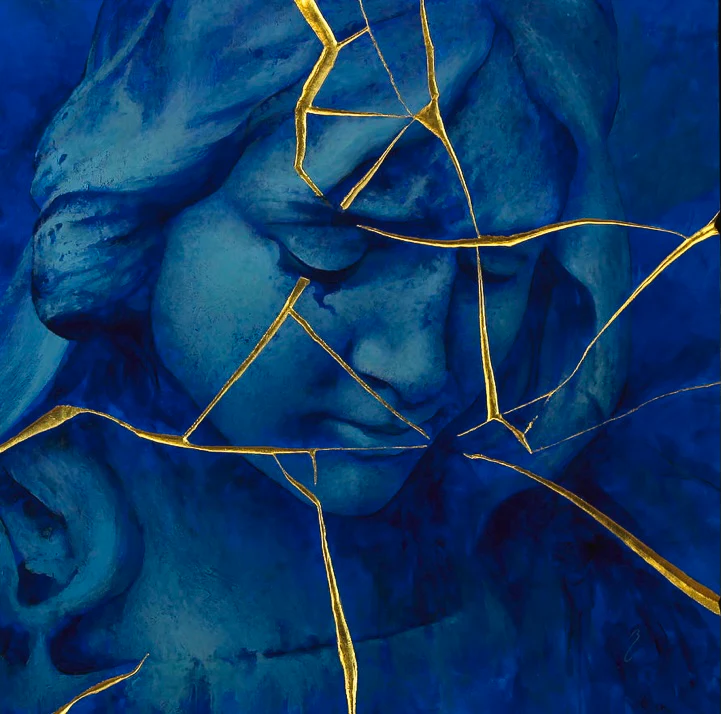
McMaster Divinity College Gallery is thrilled to announce the opening of CHRYSALIS, an exhibition by contemporary artist Bruno Capolongo, featuring a selection of his kintsugi-inspired works. Among the exhibit is a 3-part series called Yearning, which Capolongo has generously donated to McMaster Divinity College. These pieces, each measuring 40 x 40 inches and created using acrylic, oil, shattered panel, and 22-24k gold, will become permanent installation at McMaster Divinity College following the exhibit. The donation will be formally acknowledged during McMaster Divinity College’s Chapel service on February 24 at 2:00 p.m.
Following the Chapel service on February 24, MDC will host an opening reception at 3:30 p.m. in the McMaster Divinity College Gallery. Students and visitors are invited to celebrate the unveiling of these remarkable works and engage with the themes of brokenness, transformation, and hope that Capolongo explores in his art. CHRYSALIS will remain on view through April 9, 2026.
Capolongo’s work draws inspiration from kintsugi, the Japanese practice of repairing broken vessels with gold, which celebrates an object’s history rather than hiding its damage. In CHRYSALIS, this philosophy is applied to wall-mounted works composed of shattered panels that are reassembled, filled, and gilded, leaving visible fractures as evidence of endurance and renewal. The exhibition includes pieces from his ongoing Yearning series, which explore the tension between suffering and longing, despair and hope, reflecting on the human engagement with forces both seen and unseen.
Bruno Capolongo is a Canadian artist of Neapolitan descent whose work is featured in private, corporate, and public collections across North America. He has participated in over 160 exhibitions and has been represented by galleries in Toronto, New York City, Montreal, and Washington, DC. A three-time recipient of the Elizabeth Greenshields Foundation Grant, Capolongo’s work reflects a deep dialogue between contemporary and classical influences, and his CHRYSALIS series demonstrates how vulnerability and fracture can become sites of growth and beauty.